
Common Mistakes to Avoid When Buying a German Tent
In industries where speed, scalability, and operational continuity matter, temporary infrastructure is no longer viewed as a short-term compromise. It has become a strategic business decision.
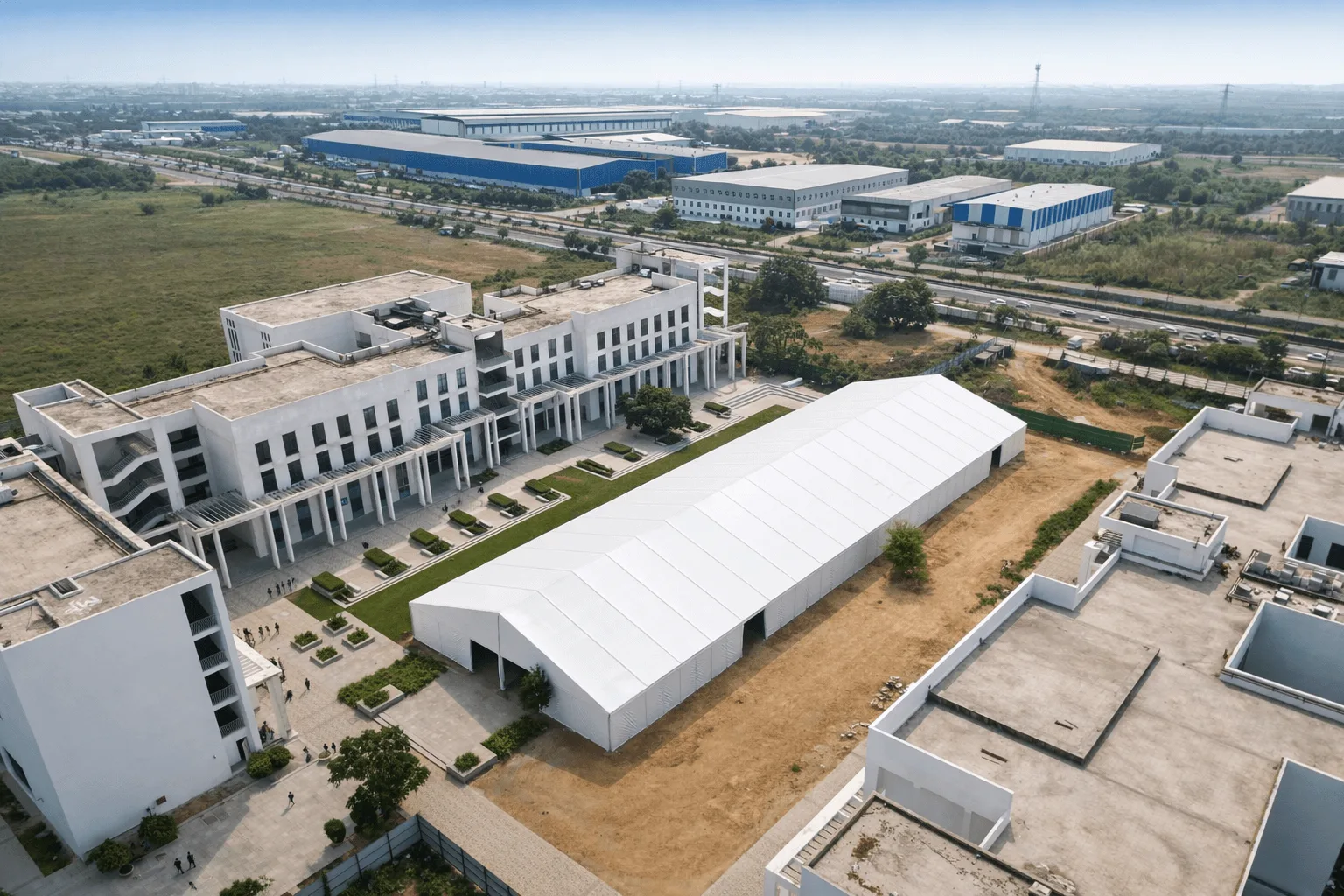
From industrial warehousing and manufacturing extensions to exhibitions, logistics hubs, aviation facilities, and large-scale events, businesses today increasingly rely on the german hangar tent for fast and flexible space solutions. But while the demand for temporary and semi-permanent structures is growing rapidly, many companies still make critical mistakes during the buying process — mistakes that later translate into operational delays, rising costs, workflow inefficiencies, and structural limitations.
The problem is not the structure itself.
The problem is choosing the wrong one.
The problem is choosing the wrong one.
At ClearSpan Structures India Pvt. Ltd., we have seen how businesses often focus only on immediate purchase pricing while overlooking the engineering, scalability, and application-specific performance of the structure. The result? A solution that looks economical initially but becomes expensive operationally.
Here are the most common mistakes businesses should avoid before buying a german hangar — especially for events and industrial applications.
Mistake #1: Treating Every German Hangar Tent as the Same
One of the biggest misconceptions in the market is that every german hangar tent offers similar performance.
In reality, the difference between a standard temporary tent and a professionally engineered aluminium frame structure is enormous.
Many low-grade structures are unable to handle:
- high wind loads,
- heavy rainfall,
- thermal fluctuations,
- long operational durations,
- or intensive industrial usage.
A properly engineered aluminium german hangar is designed around:
- structural stability,
- environmental conditions,
- load requirements,
- operational movement,
- and long-term durability.
Mistake #2: Choosing Based on Buying Cost Instead of Operational Cost
A cheaper structure may reduce initial purchase expenses, but it often increases operational costs later.
Businesses frequently underestimate how poorly designed temporary structures can impact:
The smarter approach is to evaluate the total operational impact rather than just the buying quote.
At ClearSpan Structures India Pvt. Ltd., structures are designed with application-specific roofing, walling, insulation, and ventilation solutions that help businesses maintain better operational efficiency throughout the project lifecycle.
- human safety,
- inventory safety,
- worker comfort,
- temperature control,
- machinery performance,
- operational efficiency,
- and maintenance requirements.
The smarter approach is to evaluate the total operational impact rather than just the buying quote.
At ClearSpan Structures India Pvt. Ltd., structures are designed with application-specific roofing, walling, insulation, and ventilation solutions that help businesses maintain better operational efficiency throughout the project lifecycle.
Mistake #3: Ignoring Future Scalability
Many businesses buy a german hangar only for their current requirement without considering future expansion.
Traditional temporary structures often lack flexibility for expansion. Businesses then end up dismantling and rebuilding completely new setups — resulting in downtime and additional investment.
Modern modular aluminium structures solve this differently.
A professionally designed aluminium german hangar can be expanded in span, height, or length with minimal operational disruption. This modular flexibility is one of the biggest reasons why industries increasingly prefer aluminium frame structures over conventional temporary setups.
Mistake #4: Overlooking Structural Engineering Standards
Temporary structures are often wrongly perceived as “light-duty” infrastructure.
However, industrial and commercial applications demand serious engineering precision.
A structure that performs well must account for:
- wind resistance,
- structural load distribution,
- anchoring systems,
- roof strength,
- corrosion resistance,
- and environmental exposure.
High-performance aluminium frame systems are designed to combine:
- lightweight construction,
- high structural strength,
- faster installation,
- and long operational lifespan.
Mistake #5: Not Matching the Structure to the Application
A warehouse structure and an exhibition structure cannot be treated the same way.
Yet many businesses buy generic tents without considering how the structure needs to perform operationally.
Yet many businesses buy generic tents without considering how the structure needs to perform operationally.
For example:
This is where experienced solution providers make a major difference.
ClearSpan India, delivers customized aluminium frame solutions for industrial, commercial, defence, aviation, warehouse, event, and sports applications, ensuring the structure supports operational requirements instead of limiting them.
- Industrial facilities may require insulated roofing and high side walls.
- Exhibition spaces may prioritize aesthetics and visitor flow.
- Aviation applications demand large clear spans and high entry clearances.
- Sports structures require optimized ventilation and lighting conditions.
This is where experienced solution providers make a major difference.
ClearSpan India, delivers customized aluminium frame solutions for industrial, commercial, defence, aviation, warehouse, event, and sports applications, ensuring the structure supports operational requirements instead of limiting them.
Mistake #6: Ignoring Climate & Site Conditions
Many businesses finalize a german hangar tent before properly evaluating the site environment.
This creates problems later in:
- coastal regions,
- high-temperature industrial zones,
- heavy rainfall areas,
- or locations exposed to strong winds.
Factors like:
- roof insulation,
- wall materials,
- ventilation systems,
- drainage planning,
- and structural anchoring
Modern aluminium frame structures now integrate:
Ignoring these details during the buying stage often results in expensive retrofitting later.
- insulated roof systems,
- sandwich panel walls,
- thermo roof technology,
- and weather-resistant fabric systems
Ignoring these details during the buying stage often results in expensive retrofitting later.
Mistake #7: Choosing a Vendor Instead of an Infrastructure Partner
This is perhaps the most important mistake.
Many companies select vendors based purely on purchase price without evaluating:
- engineering capability,
- customization expertise,
- installation experience,
- project execution capacity,
- or after-sales support.
They involve:
- structural planning,
- site evaluation,
- logistics coordination,
- installation precision,
- safety compliance,
- and operational integration.
At ClearSpan India, the focus goes beyond supplying structures. The company delivers complete engineered aluminium frame solutions backed by design expertise, manufacturing capabilities, and project execution support across diverse industries.
Why Aluminium German Hangar Structures Are Becoming the Preferred Choice
Industries today need infrastructure that can adapt quickly to changing operational demands.
That is why the demand for aluminium german hangar structures continues to rise across sectors like:
- logistics,
- manufacturing,
- warehousing,
- exhibitions,
- defence,
- sports,
- aviation,
- and temporary commercial infrastructure.
Compared to conventional temporary setups, modern aluminium frame structures offer:
- faster installation timelines,
- large clear-span spaces,
- modular scalability,
- lightweight yet durable construction,
- better aesthetics,
- reduced foundation dependency,
- and efficient relocation capabilities.
Conclusion
Buying a german hangar tent is no longer just about creating temporary space. It is about enabling operational continuity, scalability, and business efficiency.
The real cost of a poor purchase decision is rarely visible in the quotation itself. It appears later through:
- workflow inefficiencies,
- maintenance issues,
- climate-related discomfort,
- expansion limitations,
- and operational disruptions.
By combining engineering expertise, modular flexibility, and application-specific customization, ClearSpan India helps businesses build temporary and semi-permanent infrastructure solutions that are designed not just for immediate deployment — but for long-term performance.