


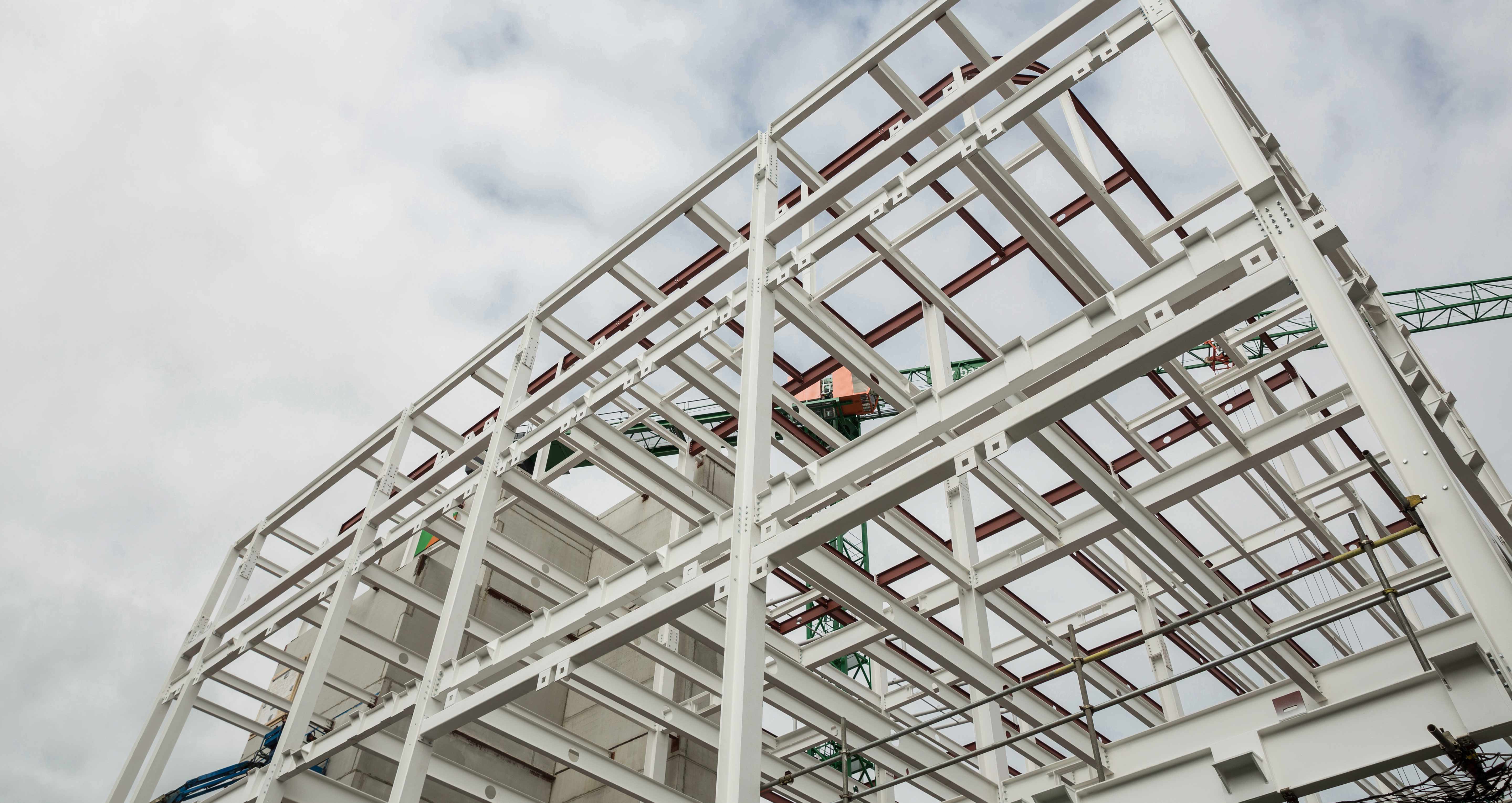
How Tubular Steel Structures Improve Strength-to-Weight Ratio
As industrial and commercial construction evolves, projects demand structures that are stronger,
lighter, and more cost-efficient. Modern buildings must support heavy loads, span larger
distances, and deliver long-term durability while optimizing material usage.
Tubular steel structures meet these requirements through their high strength-to-weight ratio and
efficient load distribution. Widely used in manufacturing facilities, warehouses, aircraft
hangars, sports
complexes, and infrastructure projects, they provide excellent structural
performance with optimized material consumption.
At ClearSpan Structures India Pvt. Ltd., we engineer tubular steel solutions that combine
structural efficiency, construction speed, and long-term reliability—delivering buildings designed
for the demands of modern industry.
What Are Tubular Steel Structures?
Tubular steel structures are built using Hollow Structural Sections (HSS), which
are steel
members with enclosed cross-sections. These sections are available in three primary
profiles:
- Circular Hollow Sections (CHS)
- Square Hollow Sections (SHS)
- Rectangular Hollow Sections (RHS)
Unlike open steel sections such as I-beams or channels, tubular members feature a closed profile
that distributes stresses more evenly throughout the section. This geometry enhances structural
performance under different loading conditions while allowing engineers to achieve the required
strength with optimized material usage.
A tubular steel building
typically incorporates these structural members into its primary
framing system, making it
suitable for projects requiring long spans, high load-bearing capacity, and unobstructed interior
spaces.
Today, tubular steel structures are widely used in:
- Industrial manufacturing facilities
- Warehouses and logistics centres
- Aircraft hangars
- Sports infrastructure
- Commercial buildings
- Power and energy facilities
- Institutional and public infrastructure
Their versatility allows engineers to design structures that are both functionally efficient and
architecturally appealing.
Understanding the Strength-to-Weight Ratio
Strength-to-weight ratio measures how much load a structural member can carry compared to
its own weight. A higher ratio means greater structural performance with less material, resulting
in lighter buildings, lower foundation loads, improved material efficiency, and potential cost
savings.
Unlike conventional steel sections that often require heavier members to increase strength,
tubular steel sections achieve excellent load-bearing capacity through their closed
geometry. This allows engineers to deliver strong, efficient structures with comparatively lighter
sections, making tubular systems a preferred choice for modern industrial and infrastructure
projects.
How Tubular Steel Structures Improve Strength-to-Weight Ratio
Efficient Load Distribution
The shape of a structural member plays a significant role in how it handles applied loads.
In tubular sections, stresses are distributed around the entire perimeter of the member rather
than concentrating at specific points. This even distribution minimizes localized stress
concentrations and allows the member to perform more efficiently under compression, tension, and
bending.
As a result, tubular members often provide greater structural efficiency than open sections of
similar weight.
For industrial projects that experience varying operational loads, this balanced load distribution
contributes to improved safety, reliability, and long-term performance.
Higher Torsional Rigidity
Many industrial structures experience twisting forces due to uneven loading, wind pressure, crane
operations, or dynamic equipment.
Tubular members possess excellent torsional rigidity because their closed cross-section resists
twisting more effectively than conventional open steel sections.
This improved resistance helps maintain structural stability while reducing deformation under
complex loading conditions.
Excellent Buckling Resistance
Buckling is one of the primary failure modes for compression members.
The enclosed geometry of tubular sections increases their resistance to buckling by distributing
compressive stresses more uniformly throughout the section.
This means engineers can often design compression members that achieve the required load-bearing
capacity without significantly increasing member size.
Improved buckling resistance also contributes to safer and more reliable structures, particularly
for buildings subjected to heavy roof loads or large unsupported spans.
Lower Structural Dead Load
Every building must support its own weight before accounting for operational loads such as
machinery, inventory, equipment, or occupants.
By achieving higher structural efficiency, tubular sections help reduce the overall dead load of
the building.
A lighter structural frame offers several practical advantages:
- Reduced foundation loads
- Lower transportation requirements
- Easier lifting during installation
- Improved seismic performance in appropriate applications
Reducing unnecessary structural weight can also simplify the construction process while improving
overall project efficiency.
Reduced Material Consumption
Modern structural engineering is not simply about making buildings stronger—it is about making
them smarter.
Because tubular members utilize material more efficiently, engineers can often achieve design
objectives with optimized steel quantities.
This optimized approach can contribute to:
- Reduced material wastage
- Improved fabrication efficiency
- Better resource utilization
- Lower embodied carbon in the structure
While every project requires detailed engineering analysis, efficient material usage remains one
of the defining advantages of tubular structural systems.
Improved Structural Stability
Industrial buildings frequently experience multiple loading conditions simultaneously, including
wind loads, seismic forces, crane loads, and operational vibrations.
Tubular steel sections provide enhanced multidirectional performance because of their symmetrical
geometry.
Their ability to resist forces from different directions contributes to a more stable structural
system, reducing excessive deflection and improving overall building performance throughout its
service life.
This characteristic makes them particularly suitable for demanding industrial environments where
structural reliability is essential.
Greater Design Flexibility
Engineering efficiency should never come at the expense of design flexibility.
Tubular steel structures provide architects and engineers with greater freedom to create
innovative structural solutions while maintaining high levels of performance.
Their ability to accommodate long spans, curved roof profiles, cantilevered sections, and open
interiors makes them suitable for a wide range of architectural and industrial applications.
This flexibility allows project teams to optimize layouts based on operational requirements rather
than being constrained by structural limitations.
Additional Benefits Beyond Structural Performance
Although strength-to-weight ratio is a defining advantage, tubular steel structures also offer
several practical benefits that contribute to successful project execution.
Faster Project Execution
Precision fabrication enables structural components to be manufactured under controlled
conditions before arriving at the project site. This streamlines installation, minimizes
rework, and helps maintain project schedules.
Reduced Foundation Requirements
A lighter superstructure often results in lower loads being transferred to the foundation.
Depending on site conditions and project requirements, this can contribute to more efficient
foundation design and optimized construction costs.
Easier Transportation and Installation
Compared to heavier structural systems, optimized tubular members can simplify
transportation logistics and on-site handling, particularly for projects in remote or
space-constrained locations.
Long-Term Durability
When properly fabricated, protected, and maintained, tubular steel structures offer
excellent durability. Appropriate corrosion protection systems and quality fabrication
practices help ensure reliable performance throughout the building's service life.
Sustainability and Material Efficiency
Steel is one of the world's most recyclable construction materials. Efficient
structural design, reduced material consumption, and the potential for future reuse or
recycling make tubular steel structures a responsible choice for projects focused on
sustainable construction practices.
Lower Lifecycle Costs
Beyond initial construction, building owners increasingly evaluate infrastructure
based on long-term value. Reduced maintenance requirements, durable structural
performance, and efficient material utilization contribute to lower lifecycle costs
over the lifespan of the structure.
These advantages have contributed to the growing preference for tubular metal
buildings among developers seeking durable, cost-effective, and future-ready
construction solutions.
Design Considerations
The performance of a tubular steel structure depends not only on the structural system itself but
also on the quality of its engineering and execution.
Successful projects require detailed structural analysis to evaluate loading conditions, member
sizing, and overall stability. Connection detailing plays an equally important role, as
well-designed joints ensure efficient load transfer throughout the structure.
Precision fabrication is essential to maintain dimensional accuracy and facilitate smooth on-site
assembly. Protective coatings and corrosion management strategies must also be selected based on
environmental conditions to maximize durability.
Finally, every project should be designed and executed in accordance with applicable engineering
standards, quality control procedures, and project-specific requirements. This ensures that the
finished structure delivers the intended levels of safety, performance, and reliability.
At ClearSpan Structures India, our approach combines engineering expertise with
precision manufacturing and project execution to develop structural solutions tailored to the
unique demands of industrial and infrastructure projects. By integrating design, fabrication, and
installation under one roof, we focus on delivering structures that perform efficiently throughout
their lifecycle.
Conclusion
As construction projects continue to demand greater efficiency, longer spans, and improved
structural performance, tubular steel structures have emerged as a practical and technically
advanced solution. Their ability to achieve a high strength-to-weight ratio allows engineers to
optimize material usage while delivering buildings that are durable, stable, and adaptable to a
wide range of industrial and commercial applications.
From efficient load distribution and superior torsional resistance to reduced dead loads and
enhanced design flexibility, tubular steel structures offer measurable advantages that extend
beyond the construction phase. They support faster project execution, improved operational
efficiency, and long-term value for owners and developers alike.
The true potential of any structural system, however, lies in thoughtful engineering, precision
fabrication, and quality execution. By combining these elements, ClearSpan Structures India
Pvt. Ltd. continue to deliver engineered steel solutions that meet the evolving needs of
modern infrastructure while maintaining the highest standards of structural performance and
reliability.